
Hej friend, | 🇩🇪 Diesen Gluedrop gibt's auch auf Deutsch
You may remember my “I’m back”-note from late November: a small sign of life after a long 040x040 hibernation.
So, 2026 is starting a bit more quietly on my end. And maybe that’s fitting for a little reflection I wanted to share with you. 040x040 travels between Hamburg and Malmö, so I’m always looking at how different places get stuck – or stay curious. I’m using a very German story here, but the pattern isn’t German: it’s what happens when systems get too comfortable.
Summer 2021. I’m in the car with my family somewhere in the Uckermark. The ZEIT politics podcast is on. They’re talking about the Ahr valley disaster, the catastrophic floods in the western part of Germany in 2021. The images are still fresh: sirens that never sounded, because they’d been dismantled years ago. Alert chains that failed. Warnings from climate researchers and meteorologists that never reached the people on the ground. Or had long been dismissed.
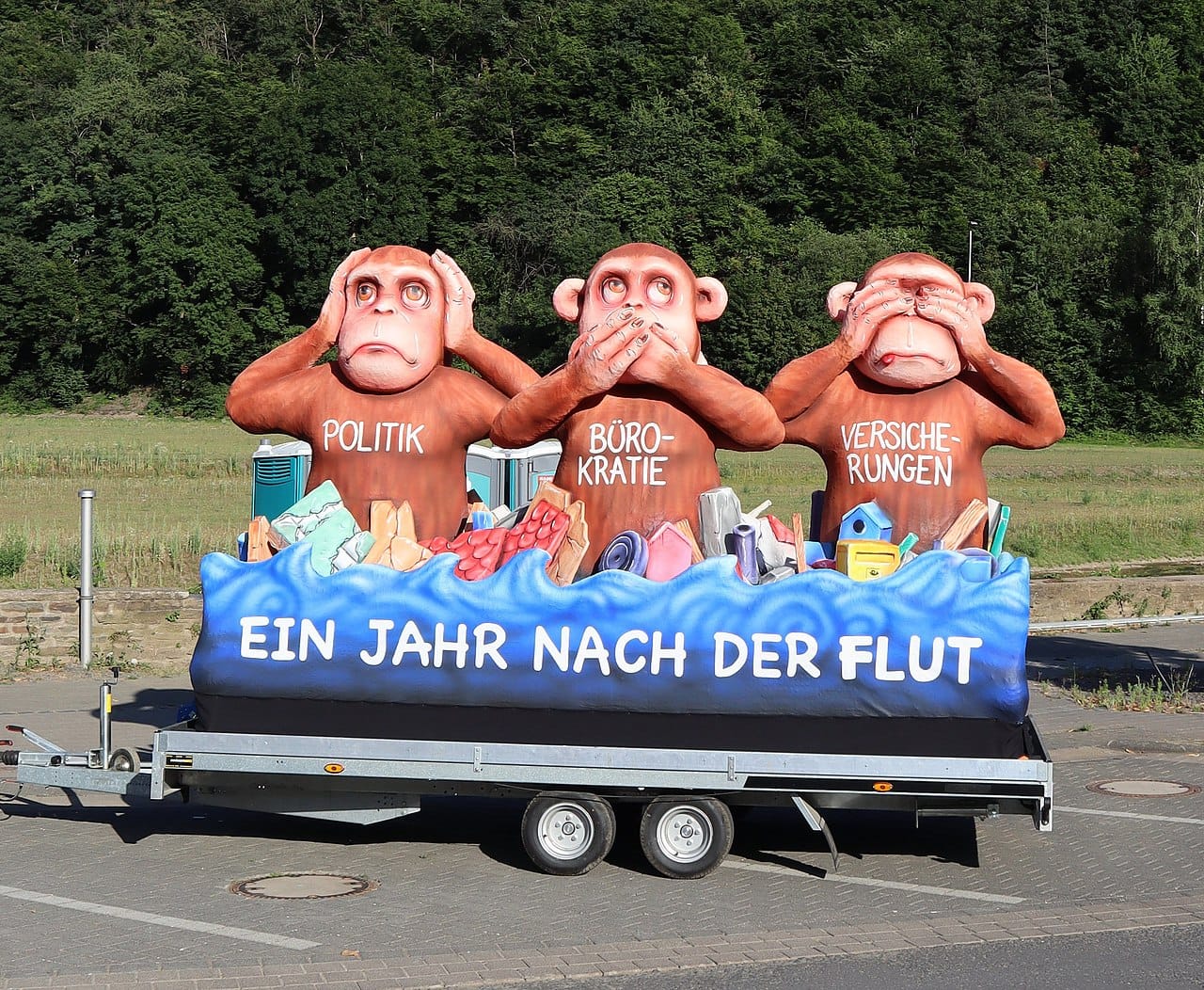

One speaker asks: Does this catastrophe show that Germany isn’t as capable as we thought – that we’re dealing with a country in need of serious repair? 🤯
Then Mariam Lau, a political editor at ZEIT who had just returned from the flooded region, says:
“Germany is still pretty good, I’d say. But it could be much better. We do have this kind of institutionalized self-satisfaction – it’s always worked out so far.”
That line hit a nerve.
Because it felt like the perfect phrasing of what I had only sensed so far: a system-level habit of telling ourselves we’re doing great, even when the evidence says otherwise.
The 🇩🇪 pattern: “It’ll be just fine.”
I see it everywhere. In companies. In cities. In politics. That baseline assumption: we’re the best, this won’t change, things will somehow keep running. Maybe we were the best at some things. But those days are over.
I'm telling this from a German perspective – but I'm curious: does this pattern feel familiar to you in Sweden, too? Is there a Swedish version of this comfort zone? I'd love to hear your take.
The car industry is just one example, probably the most obvious one. Twenty-five years ago, Toyota and Honda already had the Prius and hybrid drivetrains – made in Japan. Not Germany. I still remember Volkswagen posters from back then with a huge 9-volt battery on them proclaiming boldly: “We’re researching electric mobility!” That was, again, 25 years ago.
And today? The same old sluggishness.
Meanwhile, former German economy minister Christian Lindner is now, for all intents and purposes, a car lobbyist. And the excuse for sticking with fossil fuel engines is still called “technology openness”: a convenient way to slow things down and keep yesterday’s industries comfortable. Institutional self-satisfaction, in policy form. Congrats!
I’ve felt this strange attitude in Hamburg, too. At conferences. In institutions. That vibe of: we’re doing pretty well. We don’t need to move too much, actually.
“Mr Weber, you’re thinking too big.”
In 2015, I started 040x040, what has become our community creative exchange between Hamburg and Malmö. Two underdog cities with growing creative scenes, about 300 kilometers apart as the crow flies.
In Malmö, we got support right away – from the city and from the regional media and innovation cluster Media Evolution ❤️: infrastructure, contacts, speakers.
In Hamburg? Back in 2015, The Senate Chancellery’s Office said: “Mr Weber, you’re thinking too big.” And in a newspaper interview on 040x040, one of Hamburgs key creativity stakeholders was quoted saying: “From Hamburg’s point of view, Scandinavia isn’t all that interesting.” Oh, really?
I understand why that mindset might be tempting. When daily operations drown out everything else, and your perspective stays hyper-local, you quickly lose the capacity for foresight and new partnerships. To be fair: we did get support from Hamburg eventually – especially via Hamburg Marketing – made possible by people there 🫶 who backed 040x040 with real and personal commitment.
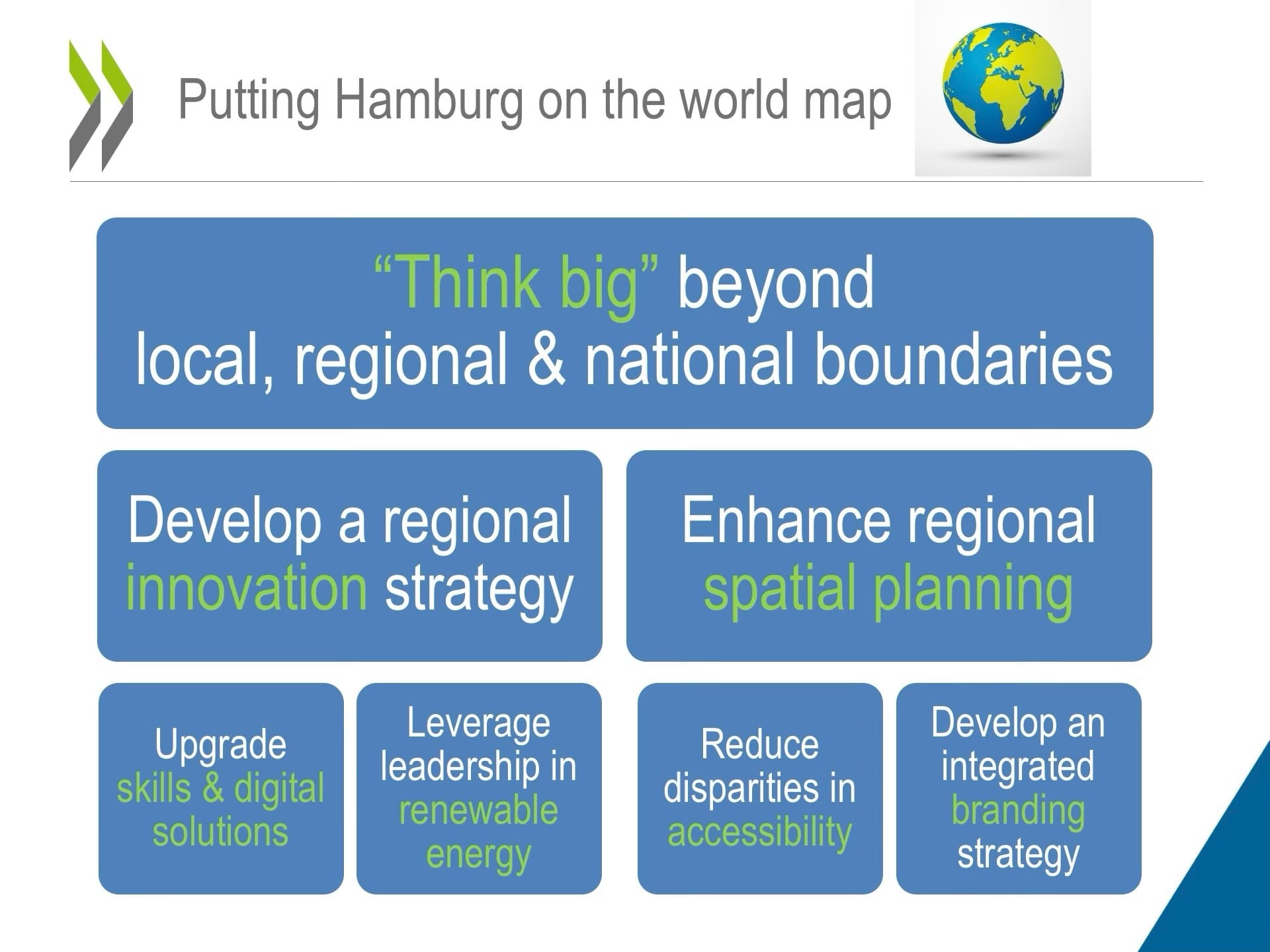
A few years later, in 2019, an OECD report about the Hamburg metropolitan region captured the paradox I experienced perfectly. One of its core recommendations was:
“Think big – beyond local, regional & national boundaries.”
The OECD says: think big. Hamburg says: you’re thinking too big. You can’t make this up.
Athletes don’t say either: “Okay, we came in fourth – but we’re still the best.” So why do we accept that attitude in business? In politics?
So what... instead?
I’ve noticed something: I’ve been writing about the same themes for years. 2021: We’ve become passive consumers of innovation, 2022: Efficiency kills reflection, patience, surprise. Now, in 2026: institutionalized self-satisfaction. Same problem. Different words. Because it’s not getting better.
It takes humility to say: others are better than yourself. And if that’s true, then we should go and meet those people, exchange perspectives – and why not even collaborate?
Strategy legend Russell Davies wrote a wonderful little book: Do Interesting. His thesis: “Don’t try to be interesting. That’s a fool’s errand. Do interesting instead. Make the world light up by paying proper attention.” That’s the opposite of institutionalized self-satisfaction. Not another self-referential strategy paper. But action. Going out. Staying curious. In the words of Harry Bosch:
“Get off your ass and go knock on doors.”

Let's go!
Here’s what I’m doing now: I’m bringing 040x040 back – after the Covid pause. Ten years after “you’re thinking too big.”
In December, I had the first conversations with Media Evolution, my partners in crime in Malmö. This spring, we’ll start community interviews. If you'd like to be part of shaping what comes next, just reply to this email – I'd love to hear from you. And in Hamburg? We’re looking for the right partners as we speak. Let’s see whether the attitude has changed 😎.
That’s my small experiment for 2026. In the spirit of Anne-Laure Le Cunff’s Tiny Experiments. And in the spirit of Dan Hill’s snowball metaphor: start tiny, think big. Shape the snowball at the top of the hill, and then let it roll. The further it rolls, the bigger it gets.
Here’s the good news: there are people and initiatives in Germany doing exactly this already. And this is just a tiny selection of places where bold experiments are happening, where things are being built, tested, and learned:
- Maja Göpel’s Mission Wertvoll rethinks transformation: values-based, understandable, and connectable.
- Project Together shows how network energy becomes real delivery: shared direction, clear roles, shared learning.
- DigitalService proves the state can build digital products, and Work4Germany brings fresh methods and perspectives right into public administration.
- SPRIND gives radical ideas a serious home: high ambition, fast cycles, and support for people who want to build what does not exist yet. They even started to collaborate with Vinnova!
- Sovereign Tech Agency is strengthening the digital foundations: maintaining and funding the critical open-source infrastructure that Europe relies on.
- FC St. Pauli’s first cooperative in German professional football shows how participation, funding, and values can align. Forza!
- On a European level, the New European Bauhaus connects local action with a bigger vision: beautiful, sustainable, together. There are regular open calls anyone can apply to.
Different scale, same muscle: people showing up, trying things, and learning in public. You don’t need the big stage. No masterplan. One thing: one place you go. One person you talk to. One project you start, or one you support. It can be a local association, the public library, adult education, a neighborhood group. A regular meetup. Something on your street.
Stand up. Join in. Knock on some doors and become part of something beautiful, lively, and worth rooting for – wherever you are.
Wishing you a year full of openness, curiosity, and the courage to do things differently. Vi ses…
Happy New Year✌️
– Matthias